


Start your Journey Today
Schedule a free consultant to discuss your career goals
Oops! Something went wrong while submitting the form.


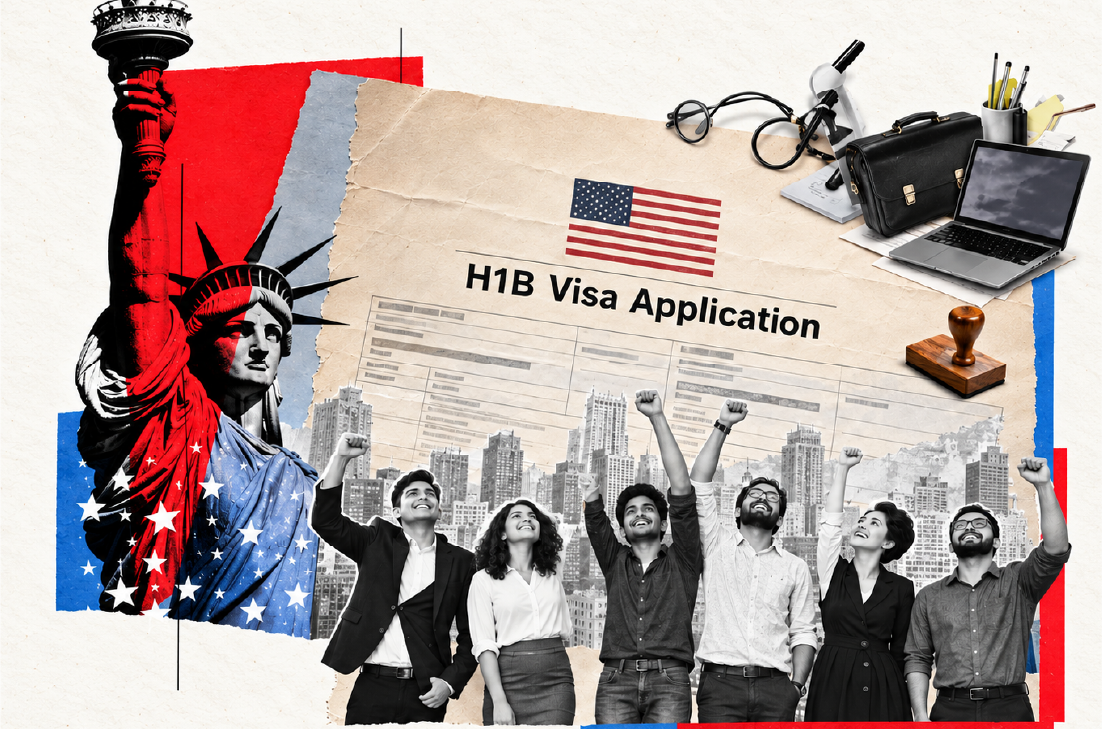
The H-1B path is still open, but it looks different from what it did two years ago. Here's the honest, up-to-date picture for anyone chasing H1B visa jobs in the USA.
If you've spent any time in an international-student WhatsApp group or a visa subreddit lately, you've probably walked away more confused than when you started. One person says the H-1B is basically dead. Another says nothing has changed. A third shares a screenshot of a rule that may or may not still apply.
So let's cut through it. The H-1B is not dead. But it has become more selective, more wage-driven, and less forgiving of last-minute planning. The professionals who are still landing H1B visa jobs in the USA aren't necessarily the ones with the best degrees. They're the ones who understand how the system works now and plan around it.
This guide is the big-picture version: what the H-1B actually is, what has changed, where the real opportunities sit, and what you can do this year to improve your odds.
What Is the H-1B, in Plain English?
The H-1B is a work visa for "specialty occupations," meaning jobs that normally require at least a bachelor's degree in a specific field. Software engineering, data science, finance, engineering, healthcare, research and accounting are the usual suspects.
Three things make it different from other work permissionsyou may have used, like OPT:
That's the structure. Everything else in this article is about navigating it.
You don't need to become an immigration lawyer, but you do need to know the headline shifts, because they directly affect which employers are willing to hire you and how they'll pay you.
Starting with the FY2027 season, USCIS replaced the purely random lottery with a system that gives higher-paid roles better odds. In simple terms, an entry tied to a Level IV wage gets more chances in the draw than one tied to Level I. Higher pay improves your odds, but it doesn't guarantee selection, and the wage level, job description and worksite entered at registration need to match the final petition.
What this means for you: the salary attached to your offer is now part of your immigration strategy, not just your finances. It's worth understanding where your role sits before you accept it.
You've likely seen the $100,000 fee talked about every where. A federal judge struck it down, but reporting indicates it may remain in effect while the government appeals, so the situation has been shifting. The important detail for most readers here: the fee applies to certain petitions, particularly for workers outside the US without a valid visa. Most change-of-status filings, such as F-1 to H-1B for someone already in the country, are generally not subject to it. Because this is still moving, confirm the current position with your employer or an immigration attorney before assuming anything either way.
The Department of Labor has proposed raising the minimum wages employers must pay H-1B workers. As of the last update we saw, that rule was still in the proposed stage. If it's finalized, entry-level sponsorship becomes more expensive for employers, which may change who is willing to hire early-career candidates.
Expect closer review of employers and applicants, including checks on employer compliance and, for visa applicants, a review of social media profiles. None of this is a reason to panic. It is a reason to make sure your resume, your LinkedIn and your public profile tell one consistent story.
Opportunity hasn't vanished. It has concentrated. If you're looking for H1B job opportunities in USA, these are the areas worth putting your energy into.
Roles in high-demand technical fields. Software, cloud, data, AI and cybersecurity continue to account for a large share of sponsorship because employers genuinely can't fill these roles locally at the volume they need.
Healthcare and life sciences. Persistent shortages in specialized clinical, research and technical roles keep sponsorship conversations realistic here.
Engineering and manufacturing technology. Electrical, mechanical, controls and industrial roles tied to infrastructure and manufacturing investment continue to hire internationally.
Finance, accounting and consulting. Larger firms with established global mobility teams tend to treat sponsorship as routine rather than exceptional.
Cap-exempt employers. This is the one many people overlook. Universities, certain nonprofit research organizations and some affiliated institutions can generally file year-round and aren't subject to the lottery. If you have a research or academic-leaning profile, this route deserves a serious look.
A common assumption is that H-1B means tech and nothing else. Tech does dominate the numbers, but non-IT professionals do get sponsored, particularly in finance, healthcare, operations, analytics, marketing analytics and engineering.
The difference is mostly in how much work you'll have to do to find the right employer:
This is where job placement for IT and non-IT professionals can make a real difference. A placement partner that works across both sides already knows which employers sponsor in which fields, so you're not spending weeks learning that the hard way. It's the difference between applying into a void and being introduced to employers who already understand the process.
Most international professionals reach the H-1B through the same sequence, and it helps to see the whole picture rather than just the next step.
If you're still in the earlier stage of this journey, our step-by-step guide on how to get a job in the USA after graduation walks through the job-search side in detail, and it's worth reading alongside the STEMOPT rules so you don't lose months to avoidable mistakes.
You can't control the lottery. You can control almosteverything around it.
This is the scenario nobody wants to plan for, and the one where misinformation does the most damage. If you lose your H-1B job, you generally have a limited grace period, typically up to 60 days, to find a new employer to file a transfer, change status, or leave the country. It's not along runway, and it doesn't extend itself because you filed something.
If this ever applies to you, read our breakdown of the H-1B layoff and B1/B2 misconception as soon as possible, and don't rely on forum advice for deadline-driven decisions. For anyone currently on OPT, our guide on what to do if you're laid off on OPT covers the equivalent situation on the student side.
Q: Is the H-1B still worth pursuing in 2026? Yes. It remains the main employer-sponsored route for specialty occupations, but it rewards early planning and employer selection more than it used to.
Q: Does a higher salary really improve my lottery chances? Under the wage-weighted system, roles tied to higher wage levels receive more entries in the selection, which improves odds without guaranteeing selection.
Q: Do I need to worry about the $100,000 fee if I'm already in the US? The fee is generally aimed at certain petitions, particularly for workers outside the US without a valid visa, and most change-of-status filings such as F-1 to H-1B are generally not covered. The legal situation has been changing, so confirm the current position with your employer or an immigration attorney.
Q: Can non-IT professionals get H-1B sponsorship? Yes. Finance, healthcare, engineering, analytics and research roles all see sponsorship, though the number of sponsoring employers is smaller, so targeting matters more.
Q: What if I'm not selected in the lottery? Many employers will register you again in future years, and you can use STEM OPT, a cap-exempt employer, or another status to keep working while you wait.
Q: Can a placement partner guarantee me an H-1B? No one can honestly guarantee a visa outcome. A good partner improves your access to employers who already sponsor and helps you present your profile properly, which raises your odds of a strong offer.
The H-1B route is narrower and more strategic than it used to be, but it's far from closed. The professionals who succeed are the ones who treat sponsorship as part of their career plan from day one, target the right employers, understand how wages and timing now affect their odds, and keep a backup path ready.
If you're early in the journey, start with the basics and build from there. If you're closer to the lottery, tighten up your documents, your wage level and your employer conversations. Either way, the more clearly you understand the landscape, the less the headlines can unsettle you.
This article is for general informational purposes only and does not constitute legal or immigration advice. H-1B rules, fees and court rulings have been changing frequently, so always confirm your specific situation with a licensed immigration attorney.