
Start your Journey Today
Schedule a free consultant to discuss your career goals
Oops! Something went wrong while submitting the form.


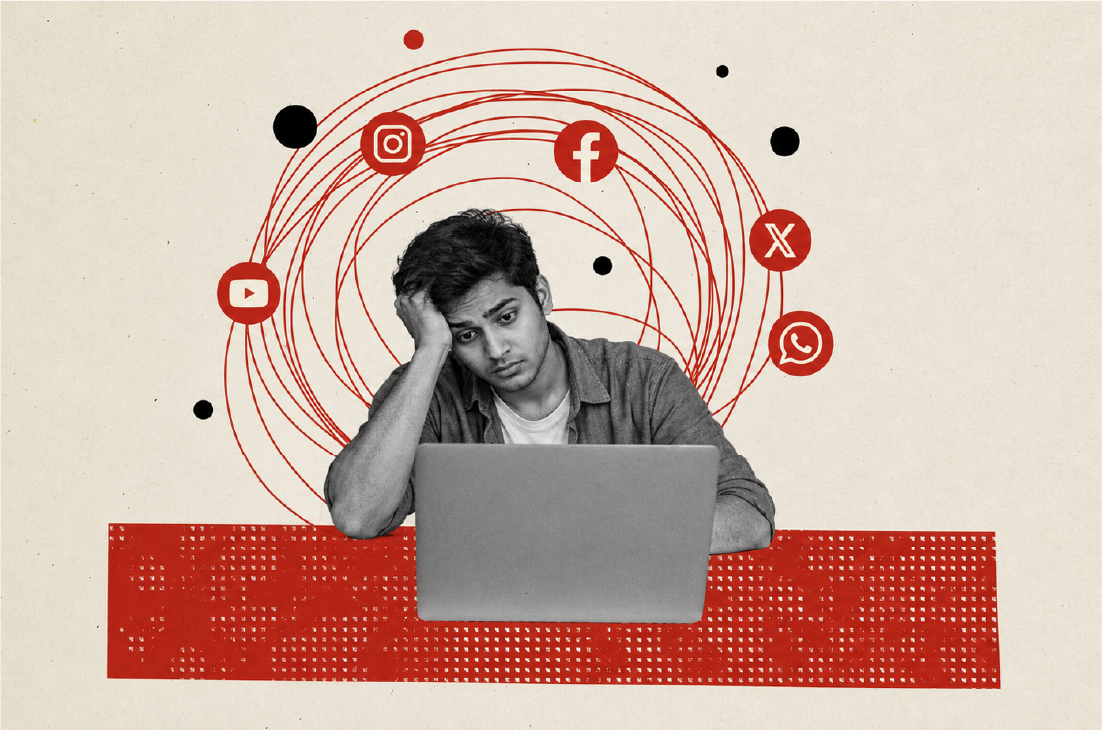
Your online presence is now part of your visa file. Here's what the rules actually say, what officers are looking for, and the practical steps international students can take today.
You've spent months on your I-20, your financial documents and your interview prep. Then someone in a group chat drops a headline: "The US is checking all F-1 students' social media now."
Cue the panic. Do I delete my accounts? Should I make everything private? Is that old post from 2021 going to cost me my visa?
Let's slow down and sort out what's actually happening, because the real picture is more specific, and a lot more manageable, than the rumor version.
Online presence review isn't brand new for students, and itisn't a single announcement from last week. It has built up in stages:
So the accurate headline isn't "the government will suddenly check everyone's accounts." It's that online presence review is now a standard, expanding part of the visa process, and students should treat it that way.
One important distinction: the public-profile instruction is directed at people applying for visas through the State Department. It isn't a standing order for every F-1 student currently in the US to keep accounts public forever. But because USCIS can also weigh social media in some benefit decisions, and because CBP can screen at ports of entry, the safest assumption is that your public footprint can be seen, and should be consistent.
The government doesn't publish a full checklist or a scoringsystem, so nobody outside the process can tell you exactly how it works. Whatthe State Department has said is that it uses available information to identifyapplicants who may be inadmissible, including those who pose a threat tonational security or public safety.
From the published guidance and what student advisors have summarized, officers may look at things like:
There's also a less dramatic, far more common issue: inconsistency. Public information can be compared against your DS-160, your I-20, your SEVIS history, your resume and your employment records. For most students, the realistic risk isn't a controversial post. It's a mismatch between what your profile says and what your paperwork says.
Think about how many places your story lives online. Your LinkedIn, your resume, your portfolio, your Instagram bio, your freelance profiles. Now think about what your official records say.
Here are the kinds of inconsistencies that tend to raise eyebrows:
If you're on or approaching OPT, this matters even more. Our guide on whether you can work multiple jobs on OPT explains what's allowed, and it's worth checking your public profiles against those rules, since a casually worded post can look like unauthorized work to someone reading it cold.
You don't need to disappear from the internet. You need tobe accurate, consistent and deliberate.
Panic moves can create bigger problems than the thing youwere worried about.
There's a bright side to all this. The same habits that protect your visa also make you a stronger candidate. Recruiters search for you too, and a clean, consistent, professional LinkedIn does a lot of the work for you.
If you're in the middle of your job search, our guide on how to get a job in the USA after graduation covers how to build a profile that works for recruiters, and our breakdown of the first 30 days of OPT shows what successful students prioritize early. If you're thinking further ahead toward sponsorship, it also helps to understand what international professionals should know about H-1B jobs, since the same online-presence review applies to H-1B applicants too.
A career-focused profile and a visa-safe profile are, in practice, almost the same thing: accurate, consistent and professional.
Q: Is the US government checking every F-1 student's social media? Not in the sweeping way the rumor suggests. Online presence review is part of the visa application process, and the public-profile instruction applies to people applying for visas. Separately, USCIS and CBP may consider public information in some benefit and entry decisions.
Q: Do I have to make my social media public? For visa applicants, the State Department's instruction is to set profiles to "public" or "open." If you're unsure how this applies to your situation, ask your DSO or an immigration attorney, and check the official State Department announcement for the latest wording.
Q: Will one old post get my visa denied? It's hard to say, since the government doesn't publish a scoring system. Content tied to the categories above, like threats, support for designated terrorist groups or evidence of illegal activity, is the real concern. For most students, inconsistency between profiles and paperwork is the more common problem.
Q: Should I delete old accounts before my interview? Be careful. Deleting accounts you've already disclosed, or removing content to conceal something, can create a credibility problem. If you have a real concern, speak to an immigration attorney first.
Q: Does this apply to students already in the US on OPT or STEM OPT? The public-profile instruction is aimed at visa applicants. However, DHS guidance indicates USCIS may weigh certain social media content in some benefit requests, and students on OPT who travel will be applying for visas and entering through CBP. Treat your public profile as visible and keep it consistent.
Q: Does this affect H-1B applicants too? Yes. H-1 Band H-4 applicants are among the categories covered by the State Department's online presence review.
The headline version of this story is scary. The real version is more manageable: your online presence is now a normal part of the visa process, and the best response is to be accurate, consistent and honest, not to scrub your life from the internet.
Audit your profiles, match them to your paperwork, follow the official guidance for your situation, and keep your professional presence strong. Do that, and you'll be better prepared for both the visa officer and the recruiter.
This article is for general informational purposes only and does not constitute legal or immigration advice. Screening policies are changing quickly and are applied case by case, so always confirm your specific situation with your Designated School Official (DSO) or a licensed immigration attorney, and check the official State Department and USCIS websites for the latest guidance.