


Start your Journey Today
Schedule a free consultant to discuss your career goals
Oops! Something went wrong while submitting the form.


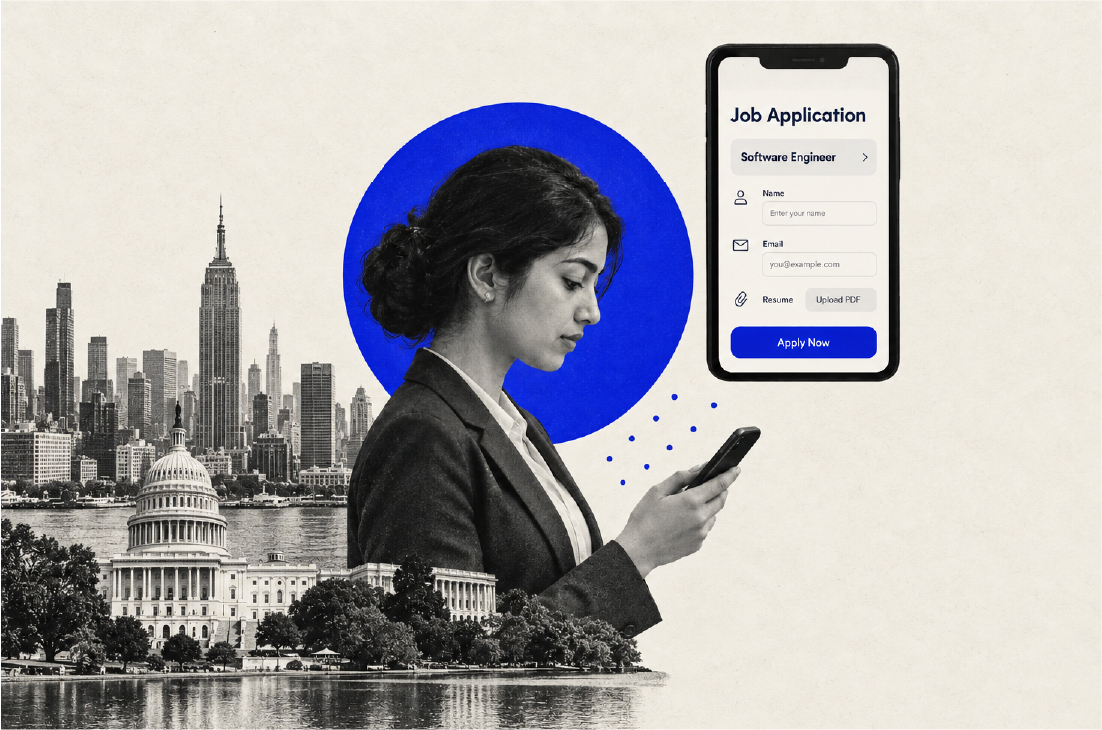
Not every job that pays well is worth taking if the company won't sponsor you. Here's how to actually find H-1B job opportunities in the USA and the employers who'll follow through.
Let's be honest about something nobody tells you clearly enough: getting an interview isn't the hard part anymore. Getting an offer from someone who will actually sponsor your H-1B and not quietly disappear when the topic comes up is where most international candidates get stuck.
You've probably felt this already. You apply, you get a callback, everything feels promising, and then somewhere between round two and the offer stage, the recruiter goes cold the second visa sponsorship comes up. It's frustrating, it's exhausting, and it makes you start doubting your own resume when the real issue was never you it was that you were talking to the wrong employer from the start.
So, let's fix that. This isn't another generic "how to job search" post. This is specifically about finding H1B job opportunities in USA that go somewhere and how to recognize the difference between an employer who sponsors on paper and one who follows through.
H-1B sponsorship isn't free, and it isn't fast. Employers must file a Labor Condition Application, pay government fees that have only gone up in recent years, and commit to a process that takes months and doesn't guarantee a lottery win at the end of it. From a business standpoint, that's areal cost and a real risk which is exactly why so many companies simply avoid the conversation altogether rather than saying no outright.
That's not a reflection of your skills. It's a reflection ofhow much friction is baked into the system. Once you understand that, the jobsearch stops feeling personal and starts feeling like a targeting problem andtargeting problems are solvable.
Here's something most job seekers skip entirely: publicH-1B sponsorship data exists, and it's free to check. The U.S. Department of Labor and USCIS publish records of which companies filed H-1B petitions, how many, and in what job titles. This alone can save you weeks of chasing dead ends.
Before you send another application, ask yourself:
A company that sponsors ten to twenty H-1B workers a year in your field is a very different bet than one that sponsored a single visa once and never again. The first is a system. The second might have been a one-off exception for someone irreplaceable which, statistically, probably isn't going to be you on your first try.
Some industries have simply built sponsorship into how they hire, because they've had to. If you're early in your search and want to reduce friction, lean toward:
This doesn't mean other industries are off-limits. It means these industries have already normalized the process internally, so you're not the one educating an HR team on what H-1B even means.
There's a common assumption that only massive, brand-name companies sponsor visas. Some of the most consistent sponsors are mid-sized companies you've never heard of because they've built repeatable hiring processes around international talent specifically to compete for skills the bigger names are also chasing.
These companies often move faster, have less internal bureaucracy around the decision, and are more willing to have an honest conversation with you upfront about timelines. Don't count them out just because they don't have a recognizable logo.
This is the part a lot of candidates try to skip, usually because it feels like it should be unnecessary you have a resume, you have LinkedIn, why would you need help?
Here's the honest answer: job placement services for international students exist because they solve a very specific problem access. A good placement partner already has relationships with employers who sponsor consistently. They're not guessing which companies might say yes; they already know, because they've placed candidates there before.
That's a meaningfully different starting point than cold applying into a black hole and hoping the algorithm surfaces your resume to the right recruiter. Structured career services for international students resume positioning, interview prep specific to sponsorship conversations, and direct introductions to vetted employers can shrink a search that might otherwise take six months down to a fraction of that, simply because you're not spending most of your time filtering out employers who were never going to sponsor you in the first place.
One of the most common ways candidates lose good opportunities isn't lack of qualification it's how the sponsorship conversation gets handled.
A few things that work:
A few signals that a "we sponsor visas" claim might not hold up:
None of these automatically disqualify a company, but they're worth a direct, polite follow-up question before you invest more time in the process.
While you're searching, don't lose sight of what's actually running in the background your OPT clock, your unemployment day limit, or your current visa status if you're already working. It's easy to get so focused on landing the right opportunity that you lose track of the calendar governing how much time you actually have to land it.
If you're currently on OPT and this search is happeningunder time pressure, it's worth reading through the first 30 days of OPT andSTEM OPT rules breakdowns on our blog, since a lot of the mistakes thatquietly shrink your runway happen early and go unnoticed until they matter.
Q: Where can I actually check if a company sponsors H-1B visas? Public databases from USCIS and the Department of Labor list historical H-1B filings by employer, including job titles and approval rates a quick search before applying can save significant time.
Q: Is it worth applying to a company with no visible sponsorship history? It can be, especially for highly specialized roles, but treat it as a longer shot and don't build your entire strategy around companies with no track record.
Q: How much does a job placement service typically help with H-1B specifically? A good placement partner won't guarantee a visa outcome no one legitimately can but they can dramatically improve your odds by connecting you directly with employers who already sponsor consistently, cutting out a lot of wasted effort.
Q: Should I avoid mid-sized or lesser-known companies? Not at all. Some of the most reliable sponsors are mid-sized companies actively competing for talent against bigger names don't judge sponsorship likelihood by brand recognition alone.
Finding real H1B job opportunities in USA isn't about applying to more jobs it's about applying to the right ones, with employers who've already shown they'll follow through. Do your homework on sponsorship history, don't shy away from the conversation, and don't be afraid to bring in professional support if it means spending your limited time talking to employers who were always going to say yes.
This article is for general informational purposes only anddoes not constitute legal or immigration advice. Visa rules and employersponsorship practices can change always confirm your specific situation witha licensed immigration attorney or your Designated School Official (DSO).
Related Reading on Our Blog